
Primary 6 is a consolidation year, not a teaching year. New content is limited; the work is closing gaps from Primary 5, building examination technique, and holding steady under pressure. Gaps left unaddressed by Term 2 become difficult to close.
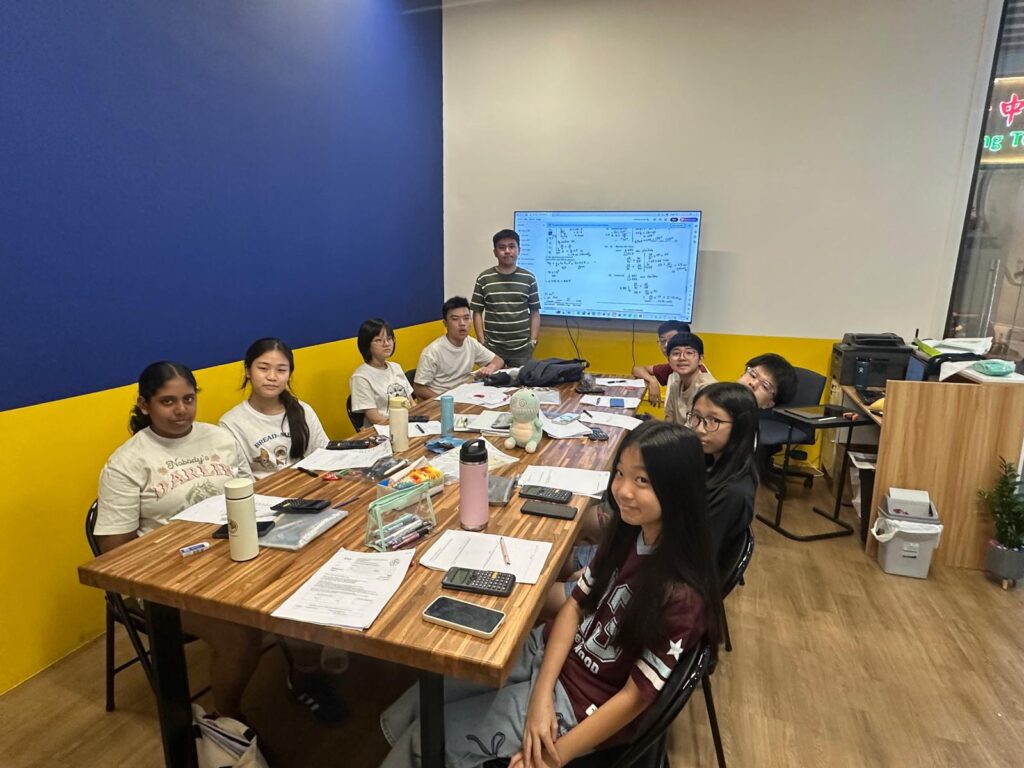
Primary 6 has a particular character. Unlike earlier years, relatively little of it is about learning new mathematics. Most of it is about consolidating what is already there, and about learning to perform under conditions that are unfamiliar to an eleven-year-old.
Understanding that changes what you should be watching for, and it changes what is worth paying for. Support that spends the year teaching content is largely solving last year’s problem. Support that spends it on examination behaviour — timing, question interpretation, error review — is working on what actually separates outcomes at this stage.
It also changes the calendar. Because Primary 6 is consolidation rather than instruction, the cheap window for fixing a real gap is Term 1. By Term 3 the same gap has to be worked around rather than closed, which is possible but considerably less comfortable.
Understanding that changes what you should be watching for.
Less is new in Primary 6 than parents expect
Less than parents expect. The heavier problem-solving topics — ratio, percentage, speed, and the more demanding fraction work — are largely introduced in Primary 5. Primary 6 extends them and combines them into multi-step problems.
The implication is worth stating plainly because it changes where you look when something goes wrong. A Primary 6 difficulty is usually a Primary 5 gap wearing a Primary 6 costume. Practising Primary 6 papers harder will not close it; it will simply produce a longer record of the same error.
The implication is important: a Primary 6 difficulty is usually a Primary 5 gap wearing a Primary 6 costume. Our Primary 5 page sets out where those gaps typically originate.
A focus for each term
- Term 1 — gap closing. The last comfortable window. Identify weak topics honestly and rebuild them.
- Term 2 — consolidation. Timed sections, mixed-topic sets, and the start of proper error review.
- Term 3 — full papers. Real conditions, reviewed thoroughly.
- Final weeks — taper. Reduce volume, keep routine, protect sleep.
Sit in on a lesson first. We run a free trial class at our centre at Hexacube, 160 Changi Road — about three minutes from Eunos MRT. Message us on WhatsApp to book, or see class schedules and fees. See what we cover in this level.
Two rules make mock papers useful
Two rules make mock papers useful rather than merely stressful.
The second rule is the one families skip, and skipping it converts a diagnostic tool into an anxiety generator. A paper completed and filed teaches almost nothing. A paper worked through afterwards, with every error classified as comprehension, method or execution, teaches more than the three papers that would have fitted into the same time.
Do them under real conditions. Correct time, no interruptions, no reference materials. A paper done comfortably at the kitchen table over two evenings measures something, but not the thing being examined.
Review takes longer than the paper. If a paper takes ninety minutes, expect to spend longer than that on the review if it is being done properly. Every error needs classifying: was it comprehension, method, or execution? Those three need different remedies.
Our free past-year papers include worked video solutions, which makes the review step considerably easier for parents who are not confident marking it themselves.
Managing the pressure honestly
Honestly, and without pretending it is not there. Children pick up household anxiety with great accuracy, and an anxious eleven-year-old makes more errors, not fewer.
Two things reliably help. First, separate effort from outcome in how you talk about it — effort is controllable, results are only partly so. Second, keep one part of the week entirely free of mathematics. Students who work every day without a break plateau earlier than those who do not.
What comes after PSLE
It is worth knowing that Secondary 1 changes the method substantially — model drawing gives way to algebra. Some of the students who find Secondary 1 hardest are those who were most fluent with the primary method.
Nothing needs doing about this during Primary 6. It is simply useful to know that a strong PSLE result does not always predict a smooth Secondary 1, and that the wobble, if it comes, is normal.
Read next
Read our complete PSLE math guide for how the papers work, and PSLE Paper 2 and the marks most students leave behind for where they go. Looking back, Primary 5 is where most Primary 6 gaps originate. Looking ahead, the five things that change from P6 to Secondary 1 is worth reading before January. If you are still choosing a school, our list of primary schools in Singapore sets out each school’s programmes and strengths. On studying this online, see Phones, Distraction and Studying Maths Online, The 7-Day Money-Back Guarantee, Explained and Screen-Based Learning and Whether Anything Is Retained.
Topic guides for this level
Each topic below has its own guide covering what it asks, where marks are lost and how to practise it:
- Algebra at Primary 6: Letters, Expressions and Simple Equations
- Average of a Set of Data: A Primary 6 Guide
- Area and Circumference of a Circle: A Primary 6 Guide
- Dividing Fractions: A Primary 6 Guide
- Percentage Increase, Decrease and Finding the Whole: A Primary 6 Guide
- Ratio: A Primary 6 Guide
- Unknown Angles in Composite Figures: A Primary 6 Geometry Guide
- Working Backwards from Volume: A Primary 6 Guide
-end
Related guides
Frequently asked questions
Is Primary 6 too late to start math tuition?
No, but the work changes. In Term 1 there is still time to rebuild foundations. By Term 3 the useful work is examination technique and error reduction rather than new learning. Both are worth doing; they are just different projects.
My child understands in class but does badly in tests. Why?
Usually a fluency or timing gap rather than a comprehension gap. Understanding a method when it is in front of you is different from retrieving it under time pressure. The remedy is timed practice, not re-teaching.
Is P6 math tuition worth it if my child is already scoring well?
It depends on whether they can explain their errors. A child scoring well who cannot say why a wrong answer was wrong has procedural knowledge without understanding, and that caps progress later. A child scoring well who can explain themselves usually needs practice and timing rather than teaching.
How many mock papers should a Primary 6 student do?
From Term 2, roughly one full paper a week, reviewed thoroughly, is more productive than three completed quickly. Review takes longer than the paper itself if it is being done properly, because every error needs classifying as comprehension, method or execution.
What should the last two weeks before PSLE look like?
Lower volume, steady routine, protected sleep. Targeted work on a small number of identified weaknesses rather than broad revision. Cramming in the final fortnight reliably lowers performance for most children, because fatigue produces exactly the carelessness the extra work was meant to remove.
Do you teach the Primary 6 syllabus or only exam technique?
Both, sequenced. Term 1 is gap closing, because that is the last comfortable window. From Term 2 onwards the balance shifts steadily towards timed practice and error review, which is where the recoverable marks sit by that stage of the year.
A note on what we can and cannot promise: the patterns described here come from what we have seen in our own classes over the years. They are not a forecast for any individual student. Progress in mathematics is produced jointly — our teachers work hard for a student who is willing to put in the effort, with support at home. We do not promise grades.
Last reviewed July 2026. Syllabus details follow the Ministry of Education and SEAB published documents.