
A math tuition trial lesson should diagnose rather than impress. Expect the tutor to find out what your child can and cannot do, and expect a specific answer afterwards about where the gap is. A polished lesson that tells you nothing is a poor sign.
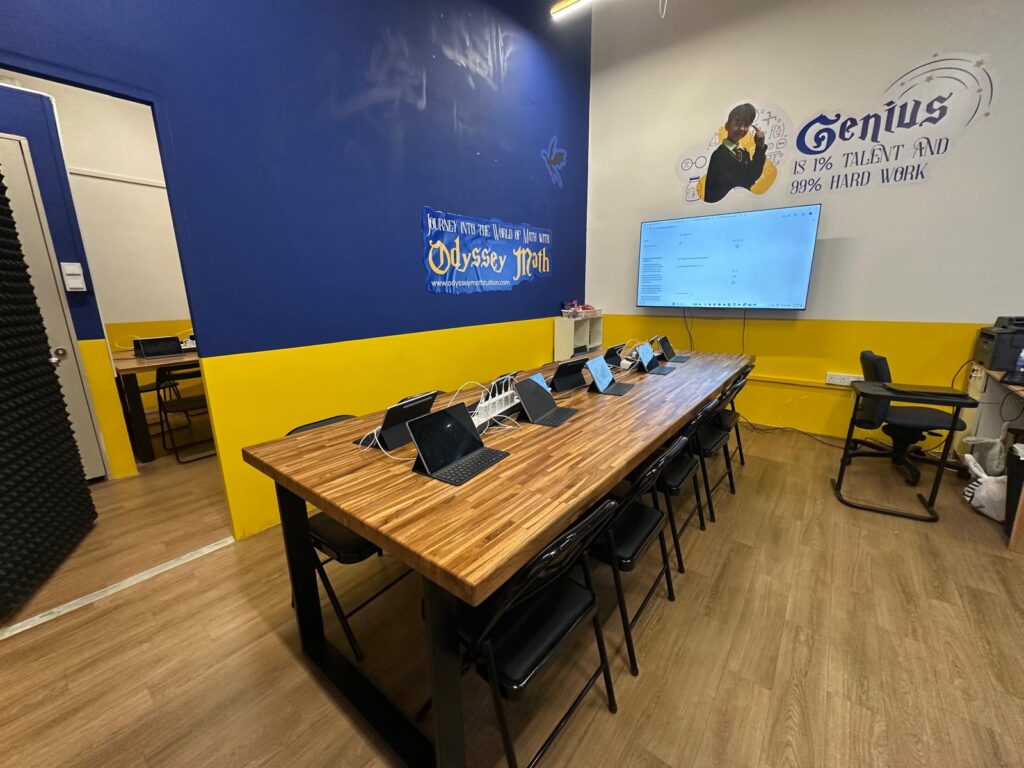
Most centres offer a trial lesson, and most parents are unsure what they are meant to be judging. This sets out what a useful trial looks like and what to ask afterwards.
The difficulty is that a trial is designed to be enjoyable, and enjoyable is not the same as informative. A polished ninety minutes in which your child felt comfortable and understood everything has told you that the tutor can teach a lesson. It has not told you whether they can find what is wrong, which is the thing you are actually buying.
What follows is what to watch for, and the single question that separates a diagnostic trial from a demonstration.
A trial should diagnose, not impress
The bulk of a first lesson should be diagnostic. A tutor needs to find out what your child can already do before deciding what to teach — and that means watching them work rather than talking at them.
In practice that means your child should be uncomfortable for part of it. A tutor who is doing the job properly will keep setting work until they find the edge of what your child can manage, because that edge is the only place useful information lives. A trial in which nothing was difficult has located nothing.
Expect some teaching too, because a trial should also show your child what lessons feel like. But a trial that is entirely presentation has told nobody anything.
What the tutor should be doing
- Setting work at a level where difficulty appears, then watching how your child responds
- Asking them to explain their reasoning, not just checking answers
- Probing backwards when an error appears, to find where the gap actually starts
- Noticing whether they give up, guess, or persist
One question to ask afterwards
One question, and the answer tells you most of what you need: what specifically is the gap, and what would you do about it first?
A good answer is concrete — “she is solid on method but slow on factorising, which is costing her time on longer questions; we would rebuild that before touching the current topic.” A vague answer means no diagnosis took place.
Sit in on a lesson first. We run a free trial class at our centre at Hexacube, 160 Changi Road — about three minutes from Eunos MRT. Message us on WhatsApp to book, or see class schedules and fees. Directions, parking and the levels we teach are on our Eunos, Kembangan and Bedok math tuition page.
What your child should feel
Ask them one thing on the way home: did the tutor find out what you were stuck on? Children answer this accurately and it is more informative than asking whether they liked it.
A student who felt seen will engage. A student who sat through a lesson pitched at nobody in particular usually will not, however competent the teaching was.
A trial in a full class is arguably more honest
Reasonable, and arguably more honest than a one-to-one trial, because it shows the actual product. What matters is whether the tutor engages your child individually within it. If your child sits unnoticed for ninety minutes, that is useful information about what the term would look like.
We run trial classes at our centre at Hexacube on Changi Road, about three minutes from Eunos MRT. Contact details and directions are here, and fees and schedules are published so there are no surprises afterwards.
If a classroom is not practical, our online courses let a student sample the same teaching approach at home.
What to bring
A recent school paper, ideally one that went badly, and any marked work showing teacher comments. These are worth more to a tutor than any description a parent can give, because they show the actual errors rather than the reported ones.
It also saves lesson time. A tutor starting from real evidence can spend the session probing the gap rather than establishing that there is one.
There is rarely a reason to decide the same day
There is rarely a reason to decide the same day, and a centre applying pressure to sign immediately is telling you something. A reasonable centre expects you to think about it, and to trial elsewhere if you want to.
What is worth deciding quickly is whether the diagnosis you were given was specific. That is perishable information — if you cannot remember what they said the gap was, it probably was not concrete enough.
Read next
Before booking anything, check whether your child actually needs tuition. When comparing, how to choose a math tuition centre and the nine criteria we judge ourselves against. On format and cost, group versus one-to-one and our fee breakdown. If you are choosing a school as well as a tuition centre, our list of primary schools in Singapore and list of secondary schools in Singapore are the companion directories. On studying this online, see Revising for Prelims With an Online Maths Course, Revising for Weighted Assessments in Lower Secondary Maths and Careless Mistakes in Maths Exams and How to Actually Stop Them.
Related guides
Frequently asked questions
Should my child prepare for a trial lesson?
No. Preparation defeats the purpose — the tutor needs to see the ordinary state of things, not a rehearsed one. Bringing a recent school paper or test is genuinely useful though.
What if my child does badly in the trial?
That is the trial working. A lesson where nothing was difficult has diagnosed nothing. The tutor should be deliberately finding the edge of what your child can do.
How many centres should we trial before deciding?
Two or three is usually enough to calibrate. Beyond that, the differences tend to be smaller than the disruption of continued trialling, and starting somewhere reasonable beats searching for somewhere ideal.
Is there any obligation after a trial?
There should not be, and a centre applying pressure to decide the same day is telling you something. What is worth deciding quickly is whether the diagnosis you were given was specific — that information is perishable, and vagueness is easier to notice fresh.
Can we trial an online course instead?
Yes, and it suits families who cannot reach the centre conveniently or whose schedules do not fit a fixed weekly class. The free past-year paper library is also open to anyone, which is a reasonable way to gauge the teaching approach before committing to anything.
What should I ask after the trial?
One question does most of the work: what specifically is the gap, and what would you address first? A concrete answer names a topic and a plan. A vague answer usually means no diagnosis took place, however pleasant the lesson was.
Should we trial more than one centre?
Two or three is usually enough to calibrate what a good session feels like. Beyond that, the differences tend to be smaller than the disruption of continued trialling, and starting somewhere reasonable beats searching for somewhere ideal.
Is a trial in a full class better than a private trial?
Arguably more honest, since it shows the actual product your child would receive. What matters is whether the tutor engages your child individually within it. A child who sits unnoticed for ninety minutes has learned something useful about what the term would look like.
A note on what we can and cannot promise: the patterns described here come from what we have seen in our own classes over the years. They are not a forecast for any individual student. Progress in mathematics is produced jointly — our teachers work hard for a student who is willing to put in the effort, with support at home. We do not promise grades.
Last reviewed July 2026. Syllabus details follow the Ministry of Education and SEAB published documents.