
Maths anxiety at PSLE is common and responds to specific, practical changes: predictability, competence in small steps, and separating a result from a child’s worth.
What anxiety does to performance
Anxiety consumes working memory, which is precisely the resource multi-step problems need. An anxious student is not simply unhappy; they are operating with less capacity.
That is why an anxious child can perform far below what they know, and why reassurance alone rarely fixes it. The remedy has to restore a sense of competence.
What tends to make it worse
Open-ended pressure — more hours, more papers, no visible end. A child who cannot see the shape of what is expected has nothing to succeed at.
Comparison, whether with siblings, classmates or a target band. It shifts attention from the work to the judgement.
Marking that focuses only on what was wrong. A student who hears nothing but corrections concludes, reasonably, that they are bad at the subject.
What helps
Small, finite, achievable tasks. “Three questions on fractions” is something a child can complete and feel competent about; “revise maths” is not.
Naming causes rather than outcomes. “You misread the question” is fixable and impersonal. “You got it wrong” is neither.
Visible progress. A list of topics moving from shaky to secure gives evidence that effort is working, which is the thing anxiety denies.
Small changes that tend to help:
- Sessions with a defined end point rather than open-ended revision
- Feedback that names the cause, not the outcome
- A visible record of topics improving
- At least one clear day a week
- Explicitly separating the result from how the child is regarded
When to get help
If a child is distressed rather than simply worried, or avoiding the subject entirely, that is worth addressing directly rather than pushing through.
Sometimes the most useful intervention is to reduce the load for a fortnight and rebuild confidence on material the child can do. It feels counter-intuitive and it often works.
What lessons at Odyssey are actually like
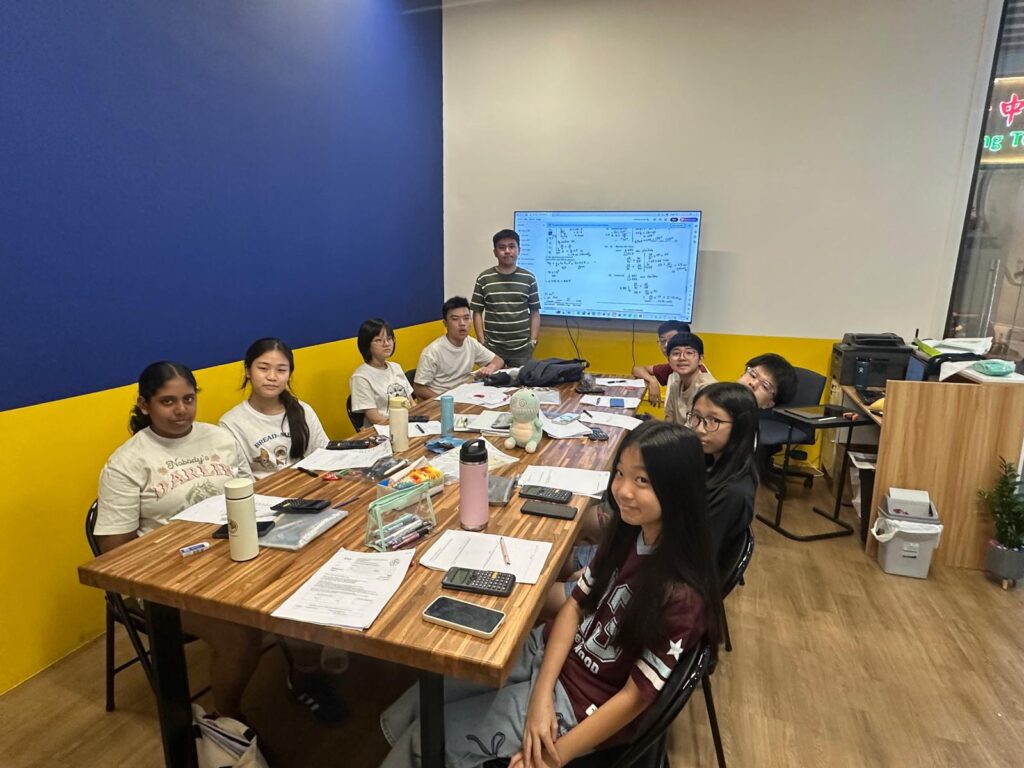
Here is a student talking about what studying with us is actually like. She is at secondary level; the teaching method is the one we use throughout, adjusted to the age. More are on Odyssey Math TV.
Where Odyssey fits
PSLE preparation runs through Primary 6 maths tuition in Singapore, part of maths tuition at Odyssey.
We keep classes small partly for this reason: a student who is quietly struggling is noticed in the lesson rather than in a report at the end of term.
We teach maths only, in small classes at Hexacube, 160 Changi Road #01-02, about three minutes from Eunos MRT. See the primary and secondary programmes, our MOE-aligned curriculum, schedules and fees, or the tutors who teach. Free video solutions to past-year papers are on Odyssey Math TV.
It is also why a difficulty in one year is so often a leftover from an earlier one. Because our curriculum spans Primary 1 through Primary 6, we can go back to the genuine cause rather than treating the symptom in front of us. A child struggling with Primary 5 fractions frequently has a Primary 3 equivalence problem, and no amount of Primary 5 practice will resolve it.
Start with the free trial lesson. We use it to work out where the difficulty really sits, and we will say so plainly — including if we think the sensible course is to wait a term and watch. Parents generally find that more useful than a confident sales answer. Get in touch or WhatsApp +65 8512 6882.
What we describe here comes from teaching this syllabus in our own classes since 2012. It is not a forecast for any individual child: progress is produced jointly, by a student willing to do the work with support at home. We do not promise grades. Topics follow the MOE primary mathematics syllabus — check the current syllabus on the MOE website for the definitive version, and see our curriculum page for how we teach it.
Related reading
- Notation Errors in H2 Mathematics
- The Risk of Copying AI Maths Solutions
- What to Bring to a Maths Diagnostic Lesson
- When an Online Maths Course Is Not the Right Fit
- PSLE Math: A Complete Guide for Singapore Parents
-end
Frequently asked questions
Is maths anxiety common at PSLE?
Very. It is one of the most frequent things parents raise with us in the Primary 6 year.
Does more practice reduce anxiety?
Targeted practice on something achievable can. Undifferentiated extra hours usually increase it.
Should I hide my own concern?
Being calm helps; pretending nothing matters rarely convinces a child. Being matter-of-fact about what the plan is tends to work better than either.
My child says they are bad at maths. How should I respond?
Address the specific rather than the general — which topic, which kind of question. Global statements are hard to argue with; specific ones are fixable.