
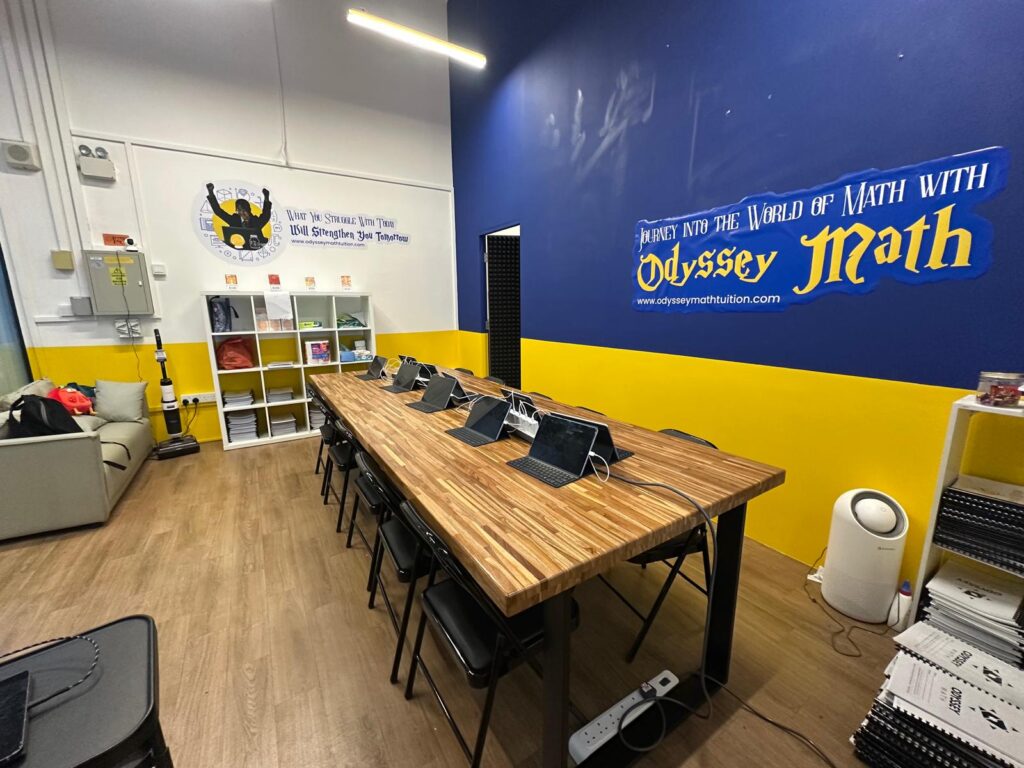
Preliminary examinations are the last full-length rehearsal before the national paper, and their value lies in what happens afterwards rather than in the mark itself. Odyssey Math Tuition’s online courses provide topical tests and past-year school papers for the repair work that should follow.
What prelims are for
Prelims are widely treated as a verdict. They are more useful as a rehearsal and a diagnostic: the last opportunity to discover, under genuine conditions, which topics collapse under time pressure and which presentation habits are costing marks.
A student who scores poorly in prelims and analyses the paper carefully is often in a better position than one who scores respectably and files it away. The mark is a snapshot; the error pattern is the actionable part.
Phase one: find out what is actually weak
Revision fails most often because it is spread evenly over material that is not evenly secure. The first week should produce a list, not coverage.
- Take a topical test cold on each major topic, with no revision beforehand.
- Record the mark and, more usefully, the type of error.
- Sort every topic into secure, shaky or absent.
- Set the secure pile aside completely for the next month.
Most students find four or five genuinely weak topics rather than twenty, which is what makes the rest of the plan possible.
Phase two: repair, one topic at a time
Work through the prelim script question by question and categorise every lost mark before revising anything. The categories matter more than the total.
Repair in order of frequency rather than difficulty. A sign error appearing four times across the paper is worth more attention than one hard topic that appeared once.
Where a topic collapsed entirely, return to its explanation and topical practice rather than simply re-reading the marked script.
Phase three: whole papers under real conditions
Full-paper practice only pays once the weak topics are repaired. Before that it mostly measures the same gaps over and over.
- Sit the paper at the real time limit, in one sitting, without notes
- Mark it honestly, awarding method marks as an examiner would
- Categorise every lost mark as knowledge, method or execution
- Repair knowledge losses; drill execution losses under time
The past-year school examination papers included in the courses are useful here precisely because they show how topics are examined rather than how they are taught.
The two error types that need opposite treatment
Marks lost because a method was unavailable and marks lost because a known method was executed badly look identical on the script and need entirely different responses.
- Knowledge losses — return to the topic explanation and practice.
- Execution losses — sign errors, misread questions, premature rounding, missing units. Drill under time; re-learning the topic will not help.
Most students in the final months have far more execution losses than knowledge losses and revise as though the reverse were true. That single misallocation costs more marks than any individual topic.
The last fortnight
In the weeks between prelims and the national paper, the priority is timed practice and error review rather than new coverage.
Re-take topical tests on the topics that failed under time. Passing a topic untimed and failing it timed are different problems with different fixes.
Rehearse pacing explicitly: decide in advance how many minutes each section deserves, and practise abandoning a stuck question and returning to it.
Where the online course fits
The Secondary 4 E-Math course provides the pieces this plan assumes: recorded explanations for repair, topical practice for fluency, topical tests for honest diagnosis, and past-year school examination papers with worked answers. Access is 24 hours a day with unlimited replays, which matters in a revision period when study happens at irregular hours.
Every online course carries a 7-day money-back guarantee, and the terms are published in full. For the wider picture of this stage, see our guide to the year and the subject guide.
Syllabus details follow Ministry of Education and SEAB published documents. Course details and prices are as published at the time of writing — check the course pages for current information. We do not promise grades.
Read next
Related reading on studying maths online: Unlimited Replays: The Most Underrated Part of an Online Math Course, What 24/7 Access to a Math Course Actually Changes, Using an Online Math Course Alongside Weekly Tuition, Inside the Secondary 2 Online Math Course, Set Language and Notation: A Secondary 4 E-Math Guide. On choosing a school, our list of primary schools in Singapore and list of secondary schools in Singapore set out what differs between them.
More on getting the most from your maths
Frequently asked questions
Should revision be by topic or by whole paper?
By topic first to repair gaps, then by whole paper under time. Whole papers first mostly measure the same gaps repeatedly.
Are past-year papers included in the online course?
Yes, with worked answers recorded alongside the topical material.
How many practice papers are enough?
Fewer, marked honestly and analysed, beat many done quickly.
What if the weakness comes from an earlier year?
Repair it at the level where it formed rather than pushing forward.
Can we subscribe for a short period?
Several access lengths are published on the course page, and all courses carry a 7-day money-back guarantee.
Does the course cover the full syllabus?
Yes. The Secondary 4 E-Math online course covers the level topic by topic with practice and tests.
Last reviewed July 2026. Syllabus details follow the Ministry of Education and SEAB published documents.