
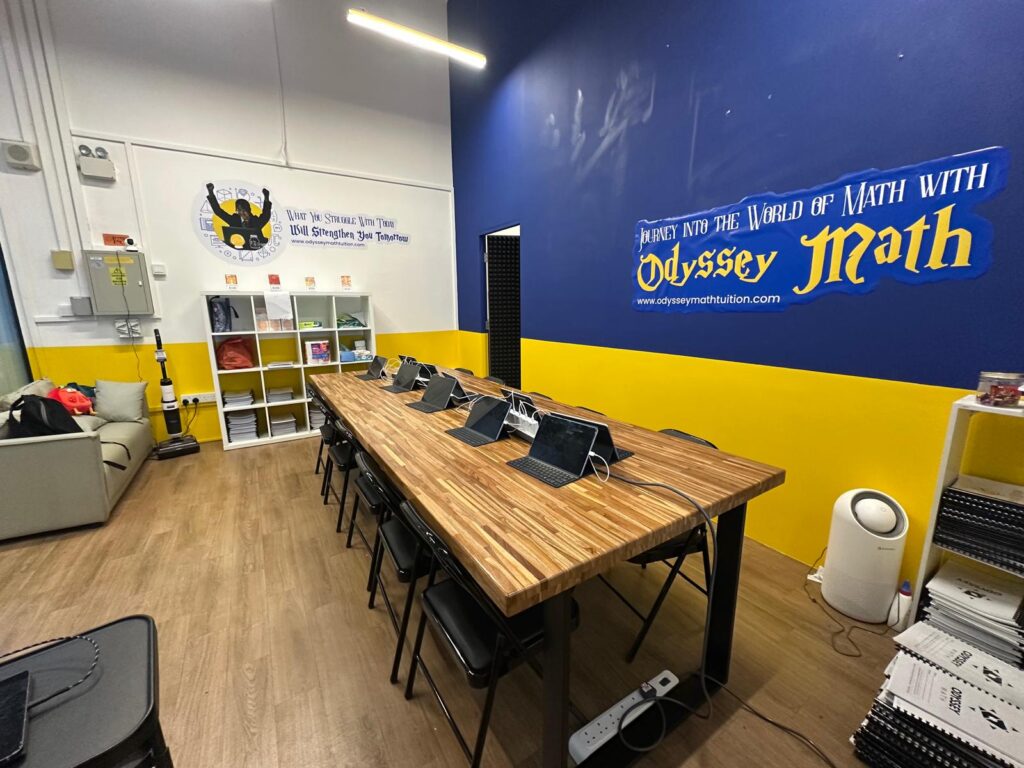
The useful signals that an online math course is working are whether a child opens it unprompted, attempts questions before watching solutions, and takes the topical tests. Odyssey Math Tuition’s system tracks progress, so parents can see what has been worked through rather than relying on an end-of-term report.
Why asking “have you done your maths?” fails
It invites a yes. It is answerable truthfully by a student who opened the course, watched eleven minutes of video and closed it. And it converts a study question into a compliance question, which is where most household arguments about schoolwork begin.
A better question is about content: what method did you use, or what were you stuck on. Those cannot be answered by someone who was not working.
Four signals worth watching
- Unprompted use. Whether they open it without being told is the single strongest indicator that the format fits.
- Attempt before watching. A student who opens the solution first is revising their reading rather than their mathematics.
- Topical tests taken. Watching is comfortable; being marked is not. Avoiding the test usually means avoiding the answer.
- Return after an error. Going back to a question that was wrong is the habit that makes self-paced study work.
What progress tracking shows and what it does not
The system records what has been worked through, which answers the question of whether the course is being used. It cannot tell you whether the student was thinking, and no system can. That is what the content questions above are for.
Treat the tracking as attendance and the conversation as assessment.
A weekly rhythm that avoids conflict
- Once a week, ask which topic they worked on. Not how long.
- Ask what the method was, in one sentence.
- Ask what they got wrong and what they did about it.
- Stop. Three questions is a conversation; ten is an interrogation.
If the answers are vague two weeks running, that is data. It usually means the format needs a live teacher alongside it rather than more supervision at home.
Screen time is the wrong frame
Parents understandably worry that an online course adds to hours already spent on a screen. The distinction that matters is not screen versus paper but active versus passive.
A student working through a question on paper with the video paused is doing something quite different from one watching a solution scroll past, even though both look identical from the doorway. The tell is whether paper and a pen are on the desk.
- Paper out, video paused, working written down — active
- Video running continuously, nothing written — passive
- Solution opened before any attempt — passive
- Question re-attempted after watching — active
The course structure is built around this distinction: every topic pairs an explanation with topical practice and a topical test, so there is always something to do rather than only something to watch. Each level’s course follows the same shape.
When to stop monitoring and change something
If a student consistently does not open the course, the answer is rarely stricter supervision. It is usually that they need someone who notices — which is what a class provides and a recording cannot. Group versus one-to-one and the nine criteria we judge ourselves against cover what to look for.
What we describe comes from how our own courses are built and what we have seen in our own classes; it is not a forecast for any individual student. Course details and prices are as published at the time of writing — see the course pages. We do not promise grades.
Read next
Related reading on studying maths online: What an Online Math Course Costs Compared With Weekly Tuition, What AI Can and Cannot Do for Maths Learning, Why Worked Solutions Still Matter More Than Final Answers, Primes, HCF and LCM: A Secondary 1 Revision Guide, Differentiation: A Secondary 4 A-Math Revision Guide. On choosing a school at this stage, see our list of secondary schools in Singapore.
More on getting the most from your maths
Frequently asked questions
Can I see what my child has completed?
Yes. The system tracks progress, so you can see what has been worked through.
How often should I check?
Weekly is enough. Daily checking tends to convert study into compliance, which is counter-productive.
My child says they have done it but marks have not moved. What now?
Ask what method they used on a recent topic. A student who has been watching rather than working cannot answer, and that distinction is the whole diagnosis.
Should I sit with my child while they study?
Occasionally, to see how they work rather than to supervise. Permanent supervision usually delays the independence the format is meant to build.
What if they will not use it at all?
That is a genuine signal that the format alone is not right. A weekly class supplies the accountability a recording cannot.
Is there a trial period?
Yes, a 7-day money-back guarantee on all online courses.
Last reviewed July 2026. Syllabus details follow the Ministry of Education and SEAB published documents.